Transparency | Press | Contact |


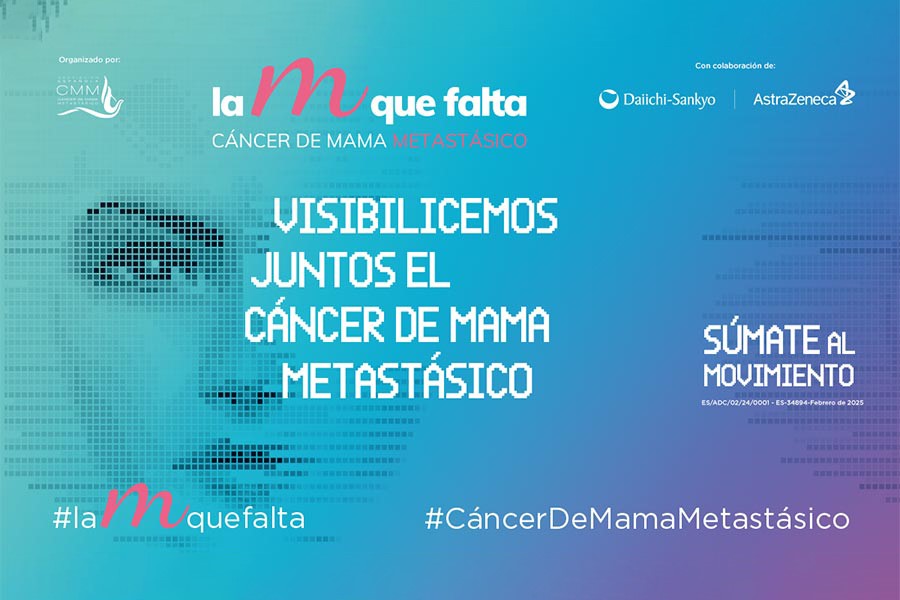
Five editions. That is how long the #laMquefalta movement has been present at the Women’s Race, giving a voice, a face and a name to metastatic breast cancer. The initiative, driven by the Spanish Metastatic Breast Cancer Association (AECMM) in collaboration with the Daiichi Sankyo | AstraZeneca Alliance, has turned each edition of the race into a loudspeaker for women living with this disease.
But there is still a long way to go. When #laMquefalta began, in 2022, only 3 out of 10 Spaniards said they knew for sure what metastatic breast cancer is1. Today, 93% of the population has heard of it, a trend that reflects the real impact of five years of awareness. However, deep understanding remains an unresolved issue2. Seventy-four percent are still unaware of what predictive biomarkers are in this disease2, markers that are key to personalizing treatments, as they allow the identification of the specific characteristics of each tumor and help select the therapy that best fits each patient. Because there is not just one breast cancer, but as many as the people who have it.
“Not all cancers are the same, and understanding the characteristics of each one changes our options and our way of life. That is why information and research are essential tools that allow us to gain time and quality of life”, says Elisenda Martínez, president and patient of AECMM.
The data leave no doubt about the magnitude of the challenge. In Europe, approximately 558,000 new cases of breast cancer are diagnosed every year3, with nearly 145,000 associated deaths4. Figures that reinforce the urgency of prioritizing early detection, the most effective treatments and, above all, a type of medicine that understands that each diagnosis is unique.
In Spain, it is estimated that in 2026 more than 38,000 women will receive a breast cancer diagnosis5, of which approximately 20% will be between 20 and 39 years old. Of the total number of diagnoses, between 5% and 6% will present metastasis6. Figures that, beyond their statistical value, represent personal stories and serve as a reminder that, despite the enormous scientific progress, there is still much work to be done.
“The clinical manifestations of metastatic breast cancer can be very diverse due to the potential appearance of metastasis in different parts of the body, which is why its treatment remains one of the major challenges for science. Therefore, it is essential both to identify the characteristics of each patient and to carry out an effective classification of the tumor type according to its molecular subgroup”, states Dr. María Hidalgo Martínez, Medical Oncology Service, OSI Araba.
That is why giving visibility to metastatic breast cancer continues to be a top priority. Raising social awareness, promoting education on biomarkers and personalized treatments, and supporting the women who live with the disease every day. That is the commitment that #laMquefalta renews every year on the start line.
“Research has radically changed the outlook on cancer in recent decades. But what really matters is understanding that behind each diagnosis there is a person, with a story, decisions and a life that remains to be built”, concludes Elisenda Martínez.
To learn more:
https://dsoncologia.es/compromiso-oncologia/nuestras-iniciativas/laMquefalta/
https://www.astrazenecapacientes.es//home/oncology/cancer-de-mama/la-m-que-falta.html
References: